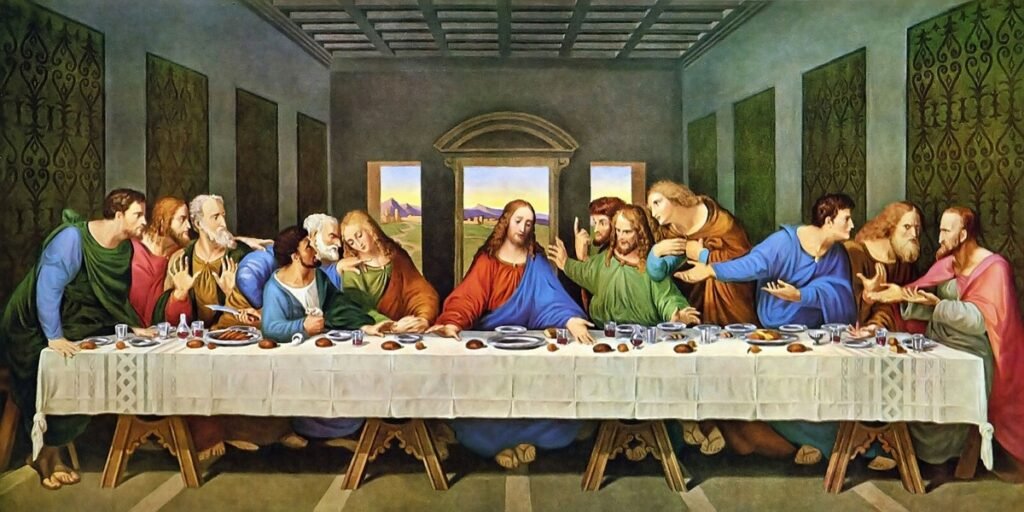
At face value, an invitation might seem relatively straightforward – you’re simply being asked to attend an event and you’re at liberty to decide whether you want to or not. However, there’s more to an invitation than the RSVP. Not only does an invitation reveal something about the person extending it, but it also conveys a considerable amount about the nature of the occasion. For example, a birthday indicates that the event is a celebration; you’re being asked to participate in something that holds personal significance to the host. Similarly, a wedding invite communicates that the person inviting you wants you to witness and celebrate this important moment with them. Even the number of guests can alter the meaning behind an invitation. An intimate dinner shared between only a handful of people suggests a closeness that arises out of personal relationship, whereas a guest list exceeding a hundred hints at an occasion intended to be shared by the wider community. Invitations are rarely just about the event itself. Beneath that text message or invite letter, there is often a deeper message about relationship and being wanted. To receive an invitation is to know that someone has not only thought of you, but also wants you there – that ultimately, there is a place for you.
This idea of invitations is particularly interesting when looking at the life of Jesus, who, during His time on earth, received plenty of invitations. One of the many invites came from a prominent Pharisee. If you aren’t familiar with the term Pharisee, Pharisees were highly respected religious leaders within Jewish society, with a reputation of being experts in God’s law. However, this expert knowledge they possessed could sometimes foster a sense of pride, leading them to view themselves as superior to others.
Jesus did not hesitate in confronting their prideful attitude. In fact, whilst at the Pharisee’s dinner, he challenges the attendees’ perception on who is worthy of an invitation into God’s kingdom through a parable about a banquet. He says:
“A certain man was preparing a great banquet and invited many guests. 17 At the time of the banquet he sent his servant to tell those who had been invited, ‘Come, for everything is now ready.’ 18 “But they all alike began to make excuses. The first said, ‘I have just bought a field, and I must go and see it. Please excuse me.’ 19 “Another said, ‘I have just bought five yoke of oxen, and I’m on my way to try them out. Please excuse me.’ 20 “Still another said, ‘I just got married, so I can’t come.’
When we consider the phrase ‘a great banquet’, what does it evoke? Perhaps a celebration? Joy? Community? An occasion that the host is eager to share? What is particularly interesting about this banquet, and arguably easy to overlook, is the host’s statement that “everything is now ready.” “Everything” emphasises the extent of preparation that has already taken place before the guests’ anticipated arrival. Those invited did not have to earn their place at the host’s table through what they could bring as their presence alone was sufficient. Their invitation was an offer to come and enjoy what has already been prepared. And yet, despite everything being ready, the guests don’t come. They are riddled with excuses.
However, their refusal to come does not compel the host to cancel the banquet. After all, he’s still prepared everything and he still wants his house to be full. Jesus continues:
21 “The servant came back and reported this to his master. Then the owner of the house became angry and ordered his servant, ‘Go out quickly into the streets and alleys of the town and bring in the poor, the crippled, the blind and the lame.’ 22 ‘Sir,’ the servant said, ‘what you ordered has been done, but there is still room.’23 “Then the master told his servant, ‘Go out to the roads and country lanes and compel them to come in, so that my house will be full.”
Given the refusal of those who he’d invited, it would be understandable for the master to cancel the banquet altogether out of disappointment. Had I been in his place, I imagine I would. But instead of closing the doors and ending the celebration, he sends his servant out to extend the invitation to “the poor, the crippled, the blind and the lame.” Within the social context of the time, this group of people were marginalised and often regarded as socially inferior, particularly by the Pharisees. They were not among those expected to attend a “great banquet” and yet, the master chooses to welcome them to his table. In fact, when they arrive, the servant is sent out again because “there is still room.”
But why is this significant? Why did Jesus choose to tell this parable at a Pharisee’s house?
The master in this story represents God and the banquet reflects the invitations that He extends to everyone – the invitation to enter into a relationship with Him. Earlier, we considered how an invitation communicates more than simply the details of the event: “to receive an invitation is to know that someone has not only thought of you, but also wants you there – that ultimately, there is a place for you.” God’s invitation reveals that He wants people at His table. He has prepared a place and there is still room. Jesus tells this parable surrounded by people who held strong convictions about who belonged at God’s ‘banquet’ and he challenges their preconceived notions by revealing that God’s guest list is far more inclusive than they imagined.
Sometimes, like the Pharisees, we can form assumptions about who has a place at God’s table. Yet Jesus demonstrates that God’s invitation is much wider than we anticipate. Those whom we might expect to accept are actually among those who refuse, whilst individuals we might never expect to be invited are among those who accept without hesitation. Through this parable we see that God’s invitation to a life with Him is not scarce. There isn’t a limited number of seats at His table nor do we have to compete with one another for a place.
There is room for the person who believes they’re too far gone. There is room for the one who does not think they belong in a church. There is also room for the person that everyone else has written off. However, most uncomfortably, this invitation also extends to those we may find difficult to accept. There is room for the person we dislike. The one who’s said and done hurtful things to us. The one we may disagree with politically. Even the one who has openly mocked and belittled our beliefs. Because, contrary to how our perceptions of others are often influenced by conscious and unconscious biases, God does not determine a person’s worth according to such distinctions. His invitation is not something to be earned by being good enough or adhering to an impossible standard, but rather, it is a gift extended to everyone out of His love.
To say that there is room for someone at God’s table is not to condone what they’ve done or suggest that their actions are acceptable – particularly when that person has hurt you or others.
God’s invitation does not erase the harm that they’ve done nor does it ask us to turn a blind eye and pretend that the wrongdoing does not matter. Rather, what this parable communicates is that our judgement and perception of others does not determine whether they are worthy of receiving God’s invite. The challenging truth is that our actions, the deeds we think would earn us a place at the ‘banquet’, never determined whether we were worthy of receiving an invitation. If our actions were the measure of our worthiness, then none of us would be invited because we have all fallen short of the standard of perfection. But the beautiful thing about God is that He does not require perfection as a prerequisite for receiving His invitation. He invites us simply because He loves us so much that He wants us there.
In this parable, Jesus makes it clear that there is room. The question is, do we actually want to see everyone at the table?
Beautiful! As always!
Te iubesc pt frumusetea sufletului tau!❤️
🙏🏼❤️
Such a deep and beautiful insight into such a simple parable which I have overlooked, so amazing! <3
I love this so much!!